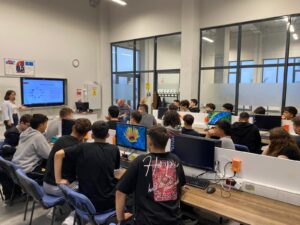
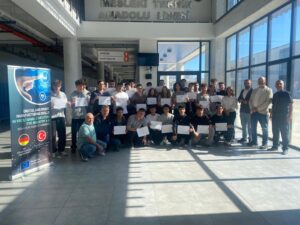
The pilot implementation phase of our Erasmus+ project, “Digital and Smart Manufacturing Skills for Industry 4.0 in Vocational Education,” was successfully carried out with the participation of 27 students studying in the Industrial Automation Technologies Department at Tacettin Aslan Vocational and Technical Anatolian High School.
The pilot training programme took place between 22 September and 1 October 2026, providing students with a total of 24 hours of training on Industry 4.0, Digital Twin technologies, and Siemens NX software. The training was delivered by teachers from the Industrial Automation Technologies Department of Tacettin Aslan Vocational and Technical Anatolian High School.
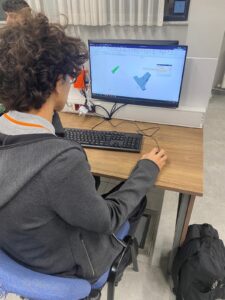
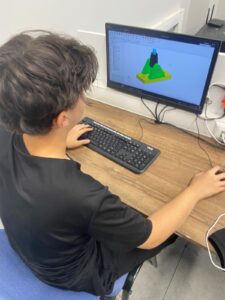
Throughout the training programme, the main objective was to enhance students’ knowledge and skills in digital manufacturing technologies, introduce them to the concept of the Digital Twin, and help them understand how these technologies are used in production processes. Through practical activities using Siemens NX software, students were supported in developing fundamental skills in three-dimensional design, digital modelling, and Digital Twin technologies.
The pilot implementation represented an important milestone in introducing the educational content developed within the project to students and putting it into practice in a vocational education setting. The programme aimed to raise students’ awareness of Industry 4.0 applications, encourage them to use digital technologies in their vocational learning processes, and better prepare them for the manufacturing technologies of the future.
The experience gained during the training is expected to contribute to the evaluation of the educational module developed within the project and to the further development of digital transformation-oriented learning practices in vocational education.
Our Erasmus+ project aims not only to support the professional development of teachers but also to enhance students’ competencies in digital and smart manufacturing technologies and strengthen the alignment of vocational education with current industrial needs.